100-WORD MICROFICTION: "EGG SALAD"

Althea wrinkled her nose and frowned, as she pulled on a deep-rooted weed in the flower bed. Looking towards Bob, who was considering their ongoing aphid problem, she shouted to him over the roar of the Saturday lawnmowers. "Bob! That egg salad you made is off! It stinks all the way out here! Throw it out!"

Bob, puzzled, yelled back, "I didn't make any eg..."

The natural gas blast leveled their home, blew out windows for blocks, and sent Althea and Bob flying skyward. They landed separately in the yards of their two adjacent neighbors, neither of whom they liked.


VIDEO: JULIO, THE DRUNKEN DRUMMER!

HAHAHAHA! Have you ever seen anyone try to play the drums while horizontal??

JULIO! I LOVE YOU, MAAAAAAAN!!!

Julio, The Drunken Drummer


TODAY'S MUSICAL CONVERSATION WITH MISS TEN

(On the way home from school today, Miss Ten and I were listening to the radio, as usual. "There She Goes" by The La's was playing.)

Miss Ten: (singing/humming along with the song, then pausing to speak) Mom? Nobody likes the music I like.

Me: Welcome to my world.

Miss Ten: Huh?

Me: Continue.

Miss Ten: It's so frustrating. I start talking about a song at school and everyone's like, what? They only know pop music. I mean, I like some pop music, but not only pop music.

Me: Well, try not to be too bummed out. You've been raised in a super-music-centric household with lots of weird bands. It's more normal for everyone to listen to what's on regular radio and TV, especially kids your age. There isn't a right or wrong.

Miss Ten: (Boy Classmate) loves the Beatles, though!

Me: See! That's great, right?

Miss Ten: There's one kid who can't listen to anything later than the 1800s.

Me: What? Hahah! Really? Whoa. Hmm.

Miss Ten: Yes! It's like, serious.

Me: Hmm. Maybe the parents think only classical music is good.

Miss Ten: Oh, yeah.

Me: Well, that's up to them. Your friend can listen to whatever later in life. Parents have been unhappy with pop music, well, forever. Some parents. There's sometimes some basis to it. Some stuff is so bad, or the lyrics are very violent or demeaning to women and such. That's not great.

Miss Ten: Well, I know, but not all music says bad stuff.

Me: I think we've talked a lot about how powerful music can be. It can influence your thinking negatively, but not if your foundation is already solid. You have to learn how to think critically about things, question them, think about what the words are trying to say. There's some bad language that's just silly, and some that's nasty. I'm not a fan of songs that use bad words about women.

Miss Ten: Who would be?

Me: Frustrated doofs.

Miss Ten: Haha! Women are great!

Me: Remember at the Flaming Lips shows? Wayne Coyne swears a lot. It bothered you but we talked about it, and then it was OK. He just gets kind of excited. He's not angry.

Miss Ten: Right, he's just WAYNE COYNE!

Me: And you didn't start swearing just because a guy onstage did.

Miss Ten: Nope. And you would be really mad, anyway, if I did.

Me: Yup.

("Step" by Vampire Weekend comes on the radio, and Miss Ten sings and hums along.)

(self-portrait by Miss Ten)


I MADE YOU A COFFEE GIF

That is all.


TEN QUOTES FROM "FASCINATING WOMANHOOD" (1963) THAT WILL MAKE YOU LAUGH, CRY, OR BREAK SOMETHING

Now that I have a chunk 'o lifetime banked, it's sometimes a good exercise to look back and think about where the world was when I got here, and how it is now. I am often frustrated by the sad lack of progress we've made in 50 years -- the idealistic, youth-driven belief of the 1960s that we would soon be living in a free, equal, and discrimination-free society has not come to full fruition, and likely never will. But when I get really down about the subject, I make myself go back and remember that the America I was born into as a female has indeed changed, and for the better. In the early '60s, girls were still expected to be sweet and submissive, pretty and perfect, and should aspire to no higher goal than snaring a husband ASAP and raising a family. Well, OK, if you wanted to go to junior college for a secretarial course or teach Sunday School or work as a bank teller for a few years, no harm done. But it just wasn't right if a girl or young woman desired something else, and the pressure was constant and omnipresent to conform.

But I was lucky. By the time I was a teenager, highly-effective birth control was widely available to women, freeing a generation of women for the first time to be able to say, nah, think I'm gonna go to grad school, think I'm gonna start a business, think I'm gonna wait awhile before taking on the responsibilities of a family. Gonna have a little ME time, or a whole damn ME life, for that matter -- as men always could. I am endlessly grateful to the generation of women before me who fought so hard and so long for the legal and medical protections that woman always deserved. Because of them, I was able to choose my life, rather than accept my lot.

I was rummaging around in a local antiques mall this weekend, and came across a book that I was unfortunately familiar with, but hadn't thought about in many years: "Fascinating Womanhood" by Helen Andelin, published in 1963. Oh, brother, what a piece of work. Young women of today who have zero idea of how very real repression was back then might pick this up, read a few pages, and think it must be some new publication from The Onion. But it's no joke. "Fascinating Womanhood" sold millions of copies, telling women that their one and only goal in life should be doing whatever it takes to please their husbands -- anything less was a shameful failure. The book inspired the "anti-feminist" movement, which is still going strong today, sadly. Since I would never want you to buy this book, I thought I might pull some quotes from it for you. Pick an emotion and go with it!

1. "Love is not reserved for the young, the single, nor the beautiful. It is reserved for those who arouse it in a man. If a man does not love with his heart and soul, it is entirely the woman's fault."

2. "Within these pages I will point out those principles which she must obey if she is to be happy, loved, and appreciated. My aim is to teach her how to become 'The real woman,' the kind she is designed to be, the kind a man wants."

3. "(This book) will teach you...how to be attractive, even adorable, when you are angry.

4. "(This book will teach you...how to gain true happiness in marriage, while placing the husband's happiness as the primary goal."

5. "If a man is critical, and you are guilty, it is only right to admit it. Thank him for reminding you that you were in error. Man, as your ruler feels somewhat responsible to teach you."

6. "Some very fine men have violent tempers. But if you could understand what he suffers and why, you would be more sympathetic. He doesn't become angry with you without reason. You may have hurt his pride, or trampled on his freedom, or stolen from him his right to rule his own children. Whatever the reason, he is provoked at you and it is a very frustrating feeling."

7. "Remember that by nature you are not capable. If you have any masculine capabilities, you have acquired them unnaturally. God did not create woman for the strenuous masculine responsibilities."

8. "There are some women who laugh in a very unfeminine manner. They open their mouths wide, throw back their heads, close their eyes and roar. If these extremes are avoided the laugh will probably be at least acceptable."

9. "Of course, a great mother could become a great artist. But if such secondary greatness is not added to the which is fundamental, it is merely an empty honor."

10. "A woman need not be well-educated, or possess high intelligence to follow a clever man's discourse. In his pleasure at having himself admired the man seldom notices that his conversation is not understood."

See why I feel like a dodged a bullet? Because this isn't some weirdo fundamentalist chick spewing her wacky idea of patriarchal bliss...this is how things were. Hilarious now, yes, and still scares the living crap out of me.

I only wish that in 1963 my first baby words would have been directed at Helen Andelin, and that those words would have been "EFF YOU."


FIVE HUGE LIFE LESSONS FROM THE FILM "HER AIM IS TRUE," AND THE LIFE OF ROCK PHOTOGRAPHER JINI DELLACCIO

What an exciting day it was to be in attendance for the official world premiere of "Her Aim Is True," the feature-length documentary from director Karen Whitehead about rock photographer Jini Dellaccio. Both showings of the film this weekend at the prestigious Seattle International Film Festival were sold out, and SIFF is to be commended for recognizing the special value "Her Aim Is True" has for Pacific Northwest residents, including 96-year-old Jini herself, in attendance both days! As a longtime supporter of this film, I have had the pleasure to watch it take shape from the idea to share Jini's story and incredible art with the world to a finished, fully-realized feature. Look!


Her Aim Is True - Trailer from Karen Whitehead on Vimeo.

I think as you watch the trailer you can get a sense of why Jini's life is a pretty darn cool one to showcase in a film, and it sure is -- she was the first female to extensively photograph rock musicians, both in portraiture and concert settings, and took some of the most iconic images of now-legendary artists. But there is so much more for a viewer to learn by viewing this film. Who Jini Dellaccio is as a person is just as remarkable as her art, and there is great value in just paying attention in "Her Aim Is True" to how she's lived her life. I thought I would make you a list.

1. Do work you love to do, and work at love. I think good ol' Freud got it right when he said that humans needed two things to feel fulfilled in life: "to love and to work." We are never sitting in quite the right place until both things are happening for us; we need to give and receive love to nourish the heart and soul, and we need to produce work that we are proud of to keep our brain happy and engaged. When you like your work, it's easy to want to get better and better at it. When you work at love, feed it and water it like the fragile little bloom that it really is, it will grow and renew itself, and be far more lovely than you could ever imagine. Jini intrinsically knew that by following her passions, she would create things of worth, and was a devoted and still-in-love partner to her husband Carl until his death. Sacrifices were made without reservation or bitterness, support was limitless and genuine, and wonderful things came of it.

2. Be prepared to reinvent yourself multiple times. The days of growing up, finishing school, and getting a nice, stable yet growing career with a single company until retirement-with-pension are gone, gone, gone for good. The single best trait you could ever hope to nurture in yourself or your kids is resiliency -- the ability to bounce back stronger and better despite setbacks, disappointments, changes, and challenges. Jini was faced with complete sea changes so many times in her life, and most people would have been at a loss, lost and living in the past. Instead, when she gave up a 12-year musical career, she found an outlet in art for her creativity and drive. When she had to leave all the connections she had made in one town to move for Carl's work, she dove in and made new ones. She wasn't afraid to start again, or perhaps more accurately, she was able to face that fear and doubt honestly enough to be able to stare it down and deal with it positively.

3. Say yes. This is one of the most delightful aspects to Jini's personality, and her ability to say "yes" to opportunities when they presented themselves, even if she wasn't at all sure if she would succeed, led her to her finest work and deepest connections. How often we say no! No, I could never do that...no, I don't know how...no, I might fail...no, someone might laugh at me...no, I can't. Because Jini more often said "yes," she was able to push out of her comfort zone to grow as an artist and a person.

4. The key to creating the best art is keen observation. It doesn't matter what the genre is -- fine art, writing, photography, music -- if you open your eyes, ears, and heart as big and wide as they can go, you are able to absorb the nuances that make for truly transcendent works. Part of Jini's process of photography was to spend significant time just sitting and talking with her subjects, getting to know them as people rather than clients, which drove her vision in composing shots that were utterly attuned to the unique qualities of each person. In Jini's work -- all of it -- one phrase comes to mind: "she really got him/her." This is what all photographers strive to hear, what we hope for with every shot we take. Only the best hear it more than a few times, if they are lucky. With the combination of Jini's generous, kind heart, sharp mind, and creative skills, she hit the ball out of the park every time.

5. You are you from the day you are born until the day you die, so stop paying attention to your number. We seem to be ruled by numbers from birth. Is the baby walking on time? Shouldn't the kid be reading by now? You should be married by 30 or you never will be! You'd better make partner in seven years or your career is over. Oh, she's too young to do that. Oh, he's too old for that now. The older I get, the more I see how ridiculous it all is, and how your age isn't all that damn important at all. Don't you feel like the same person you always were inside? Yes, of course, you grow and change (hopefully for the better), but your essential you is pretty stable, so why let other people's expectations about age stop you from doing things you want to do? It was completely unheard of in the 1960's for a middle-aged woman to have anything to do with rock music, much less one wanting to photograph such longhaired ruffians as The Sonics, The Wailers, The Rolling Stones, and The Who. I am sure that most people must've regarded the sight of Jini with her camera in the front row of a concert as the strangest thing, perhaps at best thinking she was a mom to one of the screaming teens, getting a few snapshot souvenirs. Jini was able to saunter past what society expected, with such charm and grace and sweetness, which simply radiates from her to this day. In the final segments in "Her Aim Is True," we see Jini in her 90s, returning to photography after setting it aside for many years to care for her ailing Carl. She isn't saying to herself, "Oh, I am too old now." She is saying, "I am Jini Dellaccio, and I am a photographer, and there is so much more left to see and do."

So if you have the opportunity to see "Her Aim Is True," say "yes." I am a better person for knowing more about Jini Dellaccio's work and life, and you will be, too.


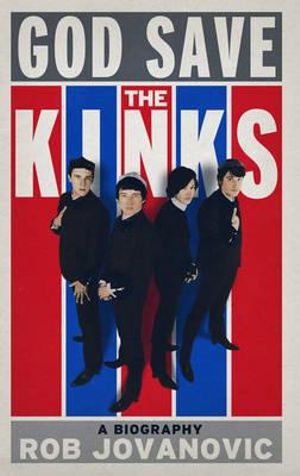
BOOK REVIEW: "GOD SAVE THE KINKS: A BIOGRAPHY" BY ROB JOVANOVIC (AURUM PRESS, 2013)

It is part of natural human curiosity to want to know more about the things and people that have a profound impact on our lives, I think -- when something is meaningful to us, we like to set that into a context, perhaps reflecting on the unique qualities of a person or thing or movement or event that affected us so dramatically. We are curious, endlessly so, and this is seen no more obviously than in the modern world's obsession with celebrities and all that makes up pop culture. At its worst, this curiosity fuels the supermarket scandal rags and paparazzi ghouls, to where you'd not wish fame upon your most-loathed enemy. But at its best, the examination provides us with a glimpse into what makes up the extraordinary -- a hero, a gifted writer, a musical genius, a great leader, exceptional teamwork -- and we are able to understand and better appreciate them, and in turn, perhaps see a bit more of those qualities that exist within ourselves.

It is not at all an exaggeration to state that The Kinks had a profound impact on my life. For those of you who are not quite so musically passionate, it may seem a bit odd that a rock band could or should make any real difference to anyone, other than to provide simple entertainment. But there are some artists that have the ability to connect with their audiences in a deeper way through their music, and what they do not only moves your feet to dance, but provides your brain with fabulous fuel, too. Like their British musical peers of the 1960s The Beatles, The Rolling Stones, and The Who, The Kinks were able to transcend time and trends to make music that mattered, and that still remains as fresh and vital as the day it was made. Unlike the other three, The Kinks contained a pair of brothers, Ray and Dave Davies, whose vastly differing characters and talents combined to produce some of the most powerful, observant, and intelligent pop music ever, while at the very same time, seemed hell-bent on destroying every professional opportunity and personal relationship they ever came across.

The Kinks' story is a captivating one, and author Rob Jovanovic has carefully crafted a fascinating read in "God Save The Kinks: A Biography," which will be released in the UK by Aurum Press on June 3rd. Jovanovic proves a thorough researcher and storyteller by understanding the readers' need to understand how and why The Kinks came to be, exploring the circumstances that helped to form one of the most influential and beloved bands of our time. By going back into both the band members' family histories as well as providing an ongoing broader historical framework, we get a feel for the gritty, war-and-Depression-scarred working class London that was home to the Davies brothers and the other two original Kinks, bassist Pete Quaife and drummer Mick Avory. Their everyday realities were a far cry from the pastoral green and pleasant land that Ray Davies often wrote about in his songs, a world more wished for than perhaps ever really existed. In post-WWII England, austerity was still the norm, the discriminatory class system firmly in place, and Davies, Davies, Quaife, and Avory were unlikely to ever break away from minimal wage work, spent driving lorries, cleaning band instruments, or illustrating weekly grocer's ads.

Jovanovic leads us from this seemingly-hopeless background into the story of how music began to pull the two distant teenage Davies brothers together for the first time, and how rapidly the pop business was changing in the immediate wake of The Beatles' staggering worldwide success. Through a combination of unprecedented musical opportunity for all British pop bands, tenacity, talent, ambition, and a lot of luck, the rather ragged Kinks secured a recording contract with major label Pye Records, promptly recorded two flop singles, and had one final chance to deliver a hit before the label would drop them. The song was "You Really Got Me," which not only ended up topping the British charts, but arguably became the foundation sound for completely new kinds of rock genres: heavy metal and punk rock.

There is nothing truer than the old showbiz adage that "you're only as good as your last record," so as the band and their strange assortment of managers and agents and producers and mentors toasted their spectacular success, the pressure was immediately applied for the band to make more hits. This, along with constant touring, the omnipresent press, crazed fans, incredible musical competition, and dramatic romantic relationships, put strain on the Davies' brothers already-fragile bond, and fighting -- both physical and verbal -- was near-constant. As one reads through "God Save The Kinks," it seems miraculous that the band survived a single year, much less thirty of them. As Ray Davies stepped up to take a leadership role in The Kinks, becoming the lead singer, frontman, primary songwriter, and eventual producer, bitterness and division followed quickly, even as the quality of the band's musical output continued to rise, often outshining their chart rivals.

Jovanovic is to be commended in his reporter's balance here; where it would seem to be easy to take sides in the story, he does not, instead carefully allowing the band's own words to speak for themselves. In choosing his quoted material, he shapes the history fairly, not an easy task when the very same event is told differently by nearly everyone involved in it! It is an easy, flowing read, testament to his skills as a writer, because the trajectory of The Kinks' story is often frustrating, punctuated by moments of musical triumph and redemption, but never able to completely be free of the chaos and cruelty that eventually caused them to stop, with no announcement, no fanfare, and no goodbyes. How so much magic and so many amazing songs were created in such a caustic environment will likely remain a mystery. That the songs are still able to bring great joy and insight to new fans year after year is not a mystery at all. They are that good.

(Note: I am very pleased and proud to be a photographic contributor to "God Save The Kinks." My thanks to Rob Jovanovic as well as Lucy Warburton at Aurum Press for a delightful working experience and the chance to be in such a gorgeous book, and to The Kinks, because I loved them so much I wanted to learn how to take pictures of them with a real camera.)

God Save The Kinks: A Biography
Author: Rob Jovanoic
ISBN: 9781845136710 
ISBN-10: 1845136713 
Format: Hardback (234mm x 153mm x mm) 
Pages: 336 
Imprint: Aurum Press Ltd 
Publisher: Aurum Press Ltd 
Publish Date: 3-Jun-2013 
Country of Publication: United Kingdom


FAN VIDEO: "I WANNA BE FORGOTTEN" BY BASS DRUM OF DEATH (2013) (STARRING MISS TEN!)

Sometimes a song comes on and you just gotta get up and MOVE! This was the scene tonight in my house, as I played a song from Bass Drum of Death's upcoming (June 25) self-titled album called "I Wanna Be Forgotten." Miss Ten just started dancing around the house like a maniac, and I thought, hey, her spontaneous reaction to music is as good as anything and I told her just to keep dancing in front of my iPhone. And now we have a very mod, very groovy, very go-go video! Please to enjoy, and please to pre-order Bass Drum of Death on iTunes RIGHT HERE or on Amazon RIGHT HERE! They were certainly a highlight band for me at Austin Psych Fest, and if you like what I like (Ty Segall, Thee Oh Sees, Jacuzzi Boys) you are gonna dig it!

Bass Drum of Death, "I Wanna Be Forgotten"


FOURTEEN WEIRD ITEMS FROM THE VALUE VILLAGE THRIFT STORE IN WOODINVILLE, WA.!

I found myself with a spare hour this afternoon in the Seattle Eastside 'burb of Woodinville, and decided to make a run back to the new Value Village thrift store there to pick up a few items that people wanted from the last time I was there! Of course, there were MORE strange goodies just waiting for me there! I love it. Please to enjoy!

Smug Candle Bear is smug.


100 WORD MICROFICTION: "THE ANSWER"

Conversation sparkled, at a pretty nighttime party with friends, drinking wine. Alone together in the kitchen, I asked him about his daughter with the bubblegum-pink cheeks and braces on her legs, her time known to be short.

“Fine…you know, fine,” he said with a brief smile, until our eyes met and locked. The room began to lurch and spin, a horrible swirling tunnel forming around us.

“…How? How do you…?” I blurted, heartbroken.

 “I…don’t…know,” he stuttered, terrified, eyes pooling with tears.

Another joined us, laughing in anticipation of sharing a good story, and we straightened up. No one could tell.


WANNA FEEL SICK? WATCH THIS CLIP FROM A FILM ABOUT WEATHER, CLIMATE, & GLOBAL WARMING...FROM THE 1950s

The best and brightest scientific minds have long been in agreement that global warming is the single greatest threat to the continuation of life on Earth. But just how long we have known that our unchecked atmosphere-destroying waste was an unfolding tragedy was unknown to me until I saw this  today. Made by legendary director Frank Capra for Bell Labs in 1958, "The Unchained Goddess," in this just-over-a-minute-long film clip, is nauseatingly prophetic.

Imagine if we had listened, and imagine if we had taken it all seriously and done something about it back then, wrestling the beast who will kill us to the ground.

Imagine.

"The Unchained Goddess" clip, 1958


I MADE YOU SOME GRADUATION CARDS


PHOTOS: MAN...OR ASTRO-MAN?, AUDACITY, ATOMIC BRIDE @ NEUMOS; THE BEETS & CMRTYZ @ BARBOZA, SEATTLE, WA. 5/18/13

Five bands, two clubs, one night = FUN CITY! Your leetle foto fren, ME, stepped out on the town last night to see and hear a diverse buncha bands, hailing from Alabama and California and New York and good 'ol Seattle, and playing anything from space-surf instrumentals to minimalist garage rock. It was a good challenge to run up and down the stairs between the two clubs (Barboza is located in the basement of Neumos) and I did at least get to see something of all of them! Please to enjoy the photos, click to enlarge and go to Flickr for more! Do check these bands out, won't you?

CMRTYZ (CMRTYZ Flickr set)


WEIRD GOVERNMENT FILM OF THE DAY: "JACKSON JUNIOR HIGH ALCOHOL EDUCATION" (1976)

You thought I found a weird PSA film yesterday? THIS ONE TOPS IT! In 1976, I, too, was a junior high school student, but we never had an alcohol use education film like this one, featuring Patches, a drunken St. Bernard dog. Yes, A HUGE DRUNK DROOLING DOG! This little movie is made extra-mega-awesome by intensely-'70s clothes, hair, and glasses, a 14-year-old girl sitting at a bar quizzing a bartender about alcohol contents, junior high kids drinking champagne at an African-American wedding, an animated sequence with "alcohol" vrooming through the body on a personal hovercraft wearing a German war helmet, tender folk songs about alcohol usage, and the science teacher bringing in a variety of booze into the classroom and announcing that if you drink rubbing alcohol. "you can destroy all the nerve cells in your body and maybe even go blind." PERFECT -- thank you, United States Department of Health, Education, and Welfare!! Please to enjoy!!

Jackson Junior High Alcohol Education (1976)


WEIRD GOVERNMENT FILM OF THE DAY: "YOU IN PUBLIC SERVICE (INTRODUCTION)" (1977)

AAAHAHAHA! Aw, MAN. I tell you, sometimes you just come across something that makes you wonder, "WHAT were they thinking?" I've been doing a lot of old film footage digging for a project lately, and today I uncovered this gem, made by your pals at the United States Department of Health in 1977: "You In Public Service." This series was designed to entice people into working for Uncle Sam by explaining in a hyper-friendly yet slow-witted way how to function in the most basic ways in order to be a good American service lackey.